







The red fox (Vulpes vulpes) is a native predator widely distributed across Denmark. It is a well-known and highly adaptable species that plays a natural role in the ecosystem, but it can also have a significant impact on local wildlife.
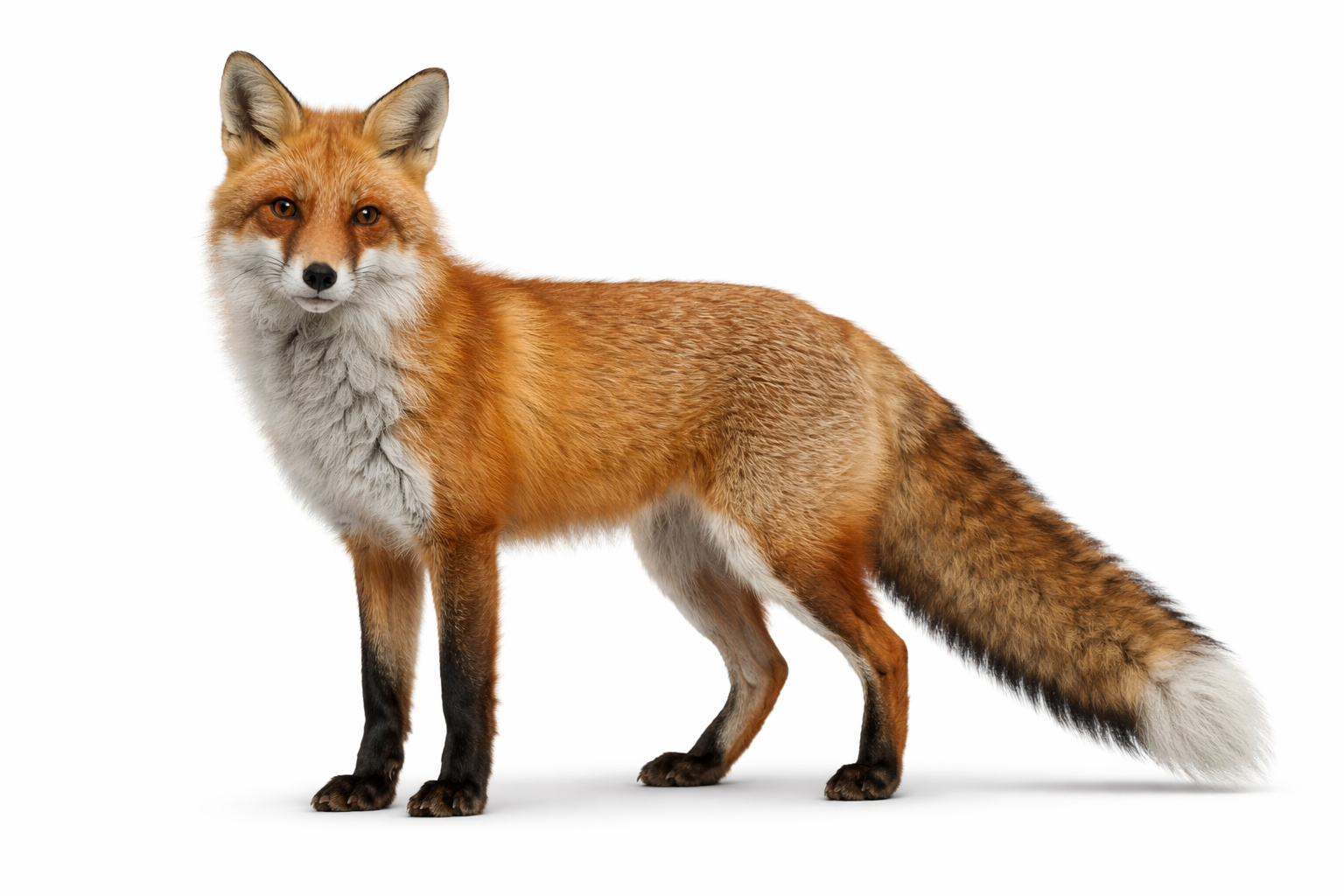
What is a Fox?
The red fox is the most common predator in Denmark and is found in a wide range of habitats, including farmland, forests and urban areas.
It is easily recognised by its reddish coat, bushy tail and alert behaviour. The fox belongs to the canine family and is primarily active at night, although it is also seen during the day.
The fox is an opportunistic feeder and has a varied diet consisting of small mammals, birds, eggs, insects and carrion.
Why is the Fox Regulated?
Although the fox is a natural part of Danish wildlife, it can have a noticeable impact on certain species, particularly ground-nesting birds and small game.
- Biodiversity: Foxes prey on species such as pheasants, partridges and other ground-nesting birds, which can be vulnerable in areas with high predator pressure.
- Population balance: In some areas, fox populations can increase to levels where they significantly affect local wildlife if no regulation takes place.
- Management considerations: There is currently increased focus on fox populations in Denmark, and discussions are ongoing about whether current regulations should be adjusted, as some populations may be under pressure.
Regulation of Fox in Denmark
Foxes are regulated in Denmark within defined hunting seasons, as well as through additional management measures during specific periods of the year.
- Hunting: Foxes may be hunted during the general hunting season using rifles or shotguns in accordance with Danish hunting regulations.
- Seasonal regulation: In certain periods, additional regulation may take place to protect vulnerable wildlife, particularly when pressure on bird populations is high.
- Methods: Common methods include calling, den control and shooting from high seats, depending on terrain and conditions.
- Future regulation: Authorities are currently assessing whether changes to existing regulations are needed, which may influence how fox management is conducted in the future.

